
An archipelago to protected
The primary connotations of the La Maddalena Archipelago are those related to the magmatic, tectonic, and metamorphic events of the Hercynian orogeny, i.e., the process that contributed to the formation of the European mountains as a result of the collision in the Carboniferous (between 360 and 300 million years ago) between the continents Laurussia, Armorica, and Gondwana. This to which we owe the geological constitution, was followed after a wide span of time by the formation of islands.
In more recent times, between 10,000 and 11,000 years ago during the Paleolithic, in the Magdalenian or “Magdalenian” toward the end of the Würm glaciation, the last walking passage between Sardinia and Corsica; the so-called “Lu caminu ‘ecchju.” Now located 60/65 meters below sea level, it followed the paleo-coastal line between Punta Paganetto in Spargiotto to the shoal of Budelli and then passed along Lavezzi Island and finally connected to Capo Pertusato.
The seven main sisters: La Maddalena, Caprera, Spargi, Santo Stefano, Budelli, Santa Maria and Razzoli are havens that can be enjoyed 365 days a year.
National Parks as defined by Art. 2 of the framework law no. 394/1991, are “land, river, lake or marine areas that contain one or more intact or even partially altered ecosystems by anthropogenic interventions, one or more physical, geological, geomorphological, biological formations of international or national importance for scientific, aesthetic, cultural, educational and recreational naturalistic values, such as to require the intervention of the State for the purpose of their conservation for present and future generations.”
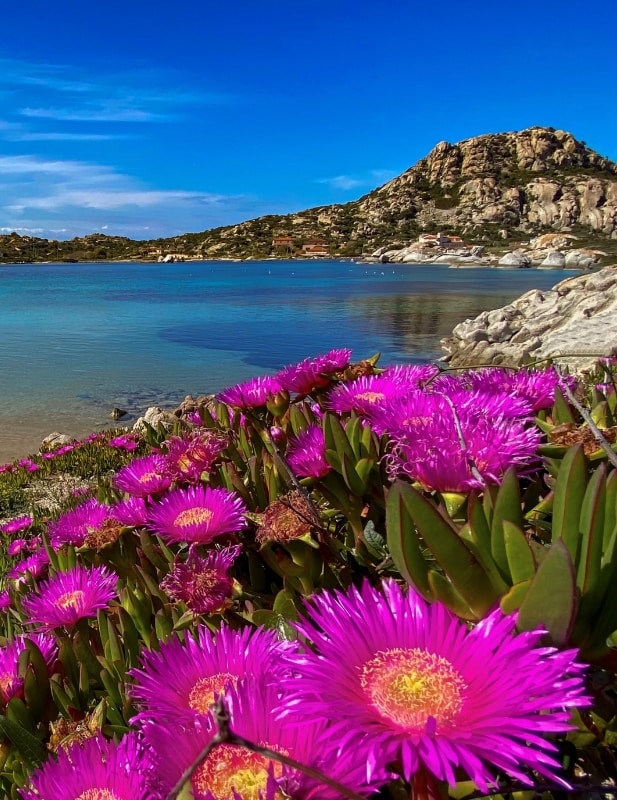
Our beautiful and unique territory has been promoted to National Park with law no. 10 of January 1994 and with Presidential Decree in May 1996. It is Sardinia’s first National Park with 20,000 hectares of marine and terrestrial area, 180 km of coastline (1/10th of Sardinia’s). It boasts a floristic heritage of 900 plant entities (1/3 of Sardinian Flora) with 50 endemic species making it a S .I.C. (Site of Community Interest).
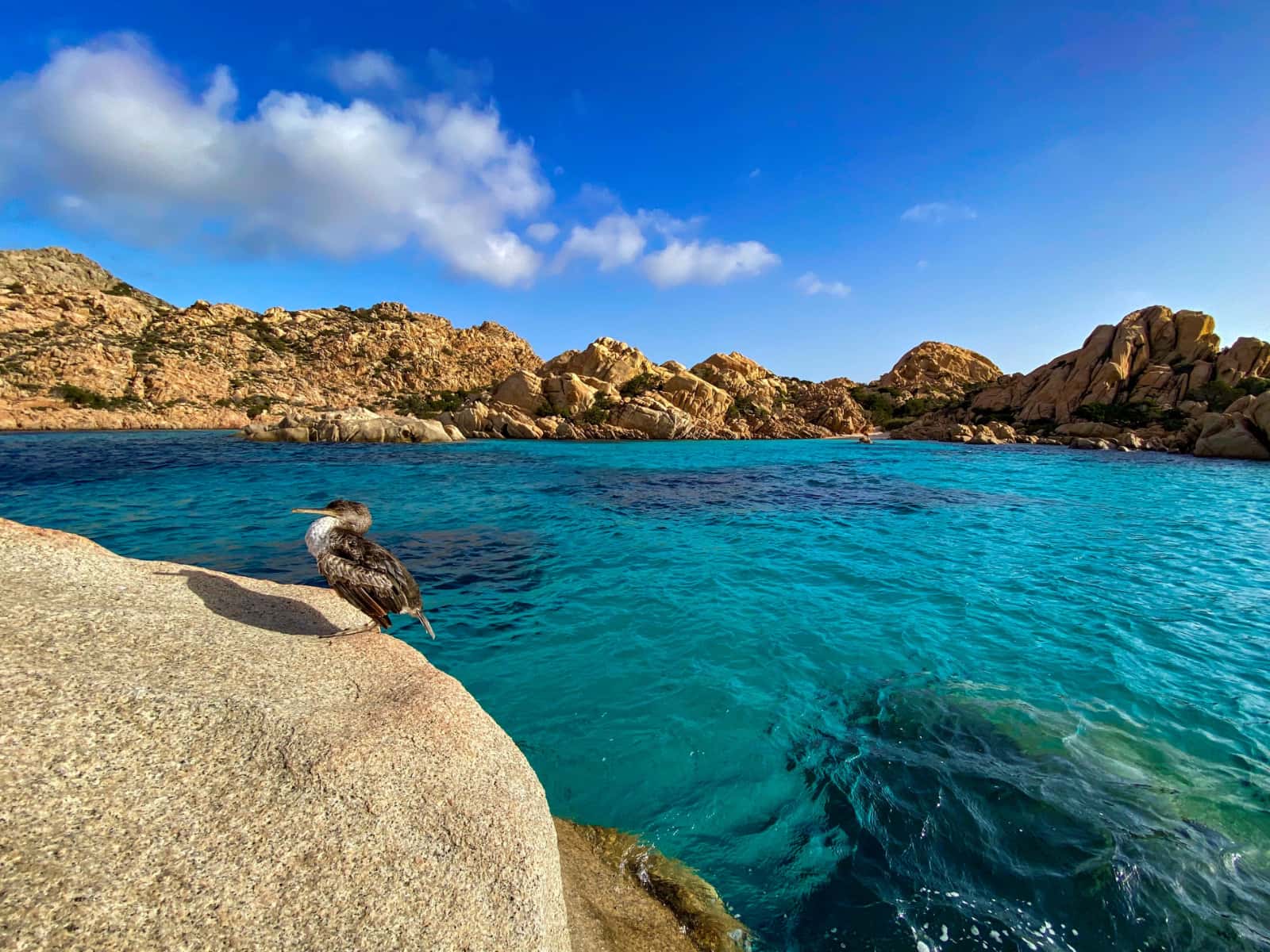
In forested areas, wetlands, dune systems, marine and terrestrial areas, the presence of marine and terrestrial avifauna (both continental and endemic) determine SPAs (Special Protection Areas). The Biodiversity expressed by the La Maddalena Archipelago confirms the value of the heritage contained in its natural treasure chest. The slow flights of the Herons, the garrulous cries of the Tufted Marangoni and Corsican Gulls, majestic and striking granite rocks, grasslands, marshes, pine forests, ilex groves, multicolored Mediterranean scrub with fragrant essences, clear skies, the ever-present Mistral, more than 60 all-free sandy shores, which with Cala di Roto (Pink beach), Cala Coticcio (Tahiti), Cala d’a Rena bianca, Porto della Madonna, Cala Granara, Cala Napoletana, Cala Corsara just to name a few, characterize naturalistically this Archipelago of the Mouths.
The islands of North Sardinia have always been visited by skilled navigators; the Pisans frequented them as early as the 1200s, and the Genoese, because of the narrow passages, made even more difficult by sailing, called them the “Islands of the Caruggi.”
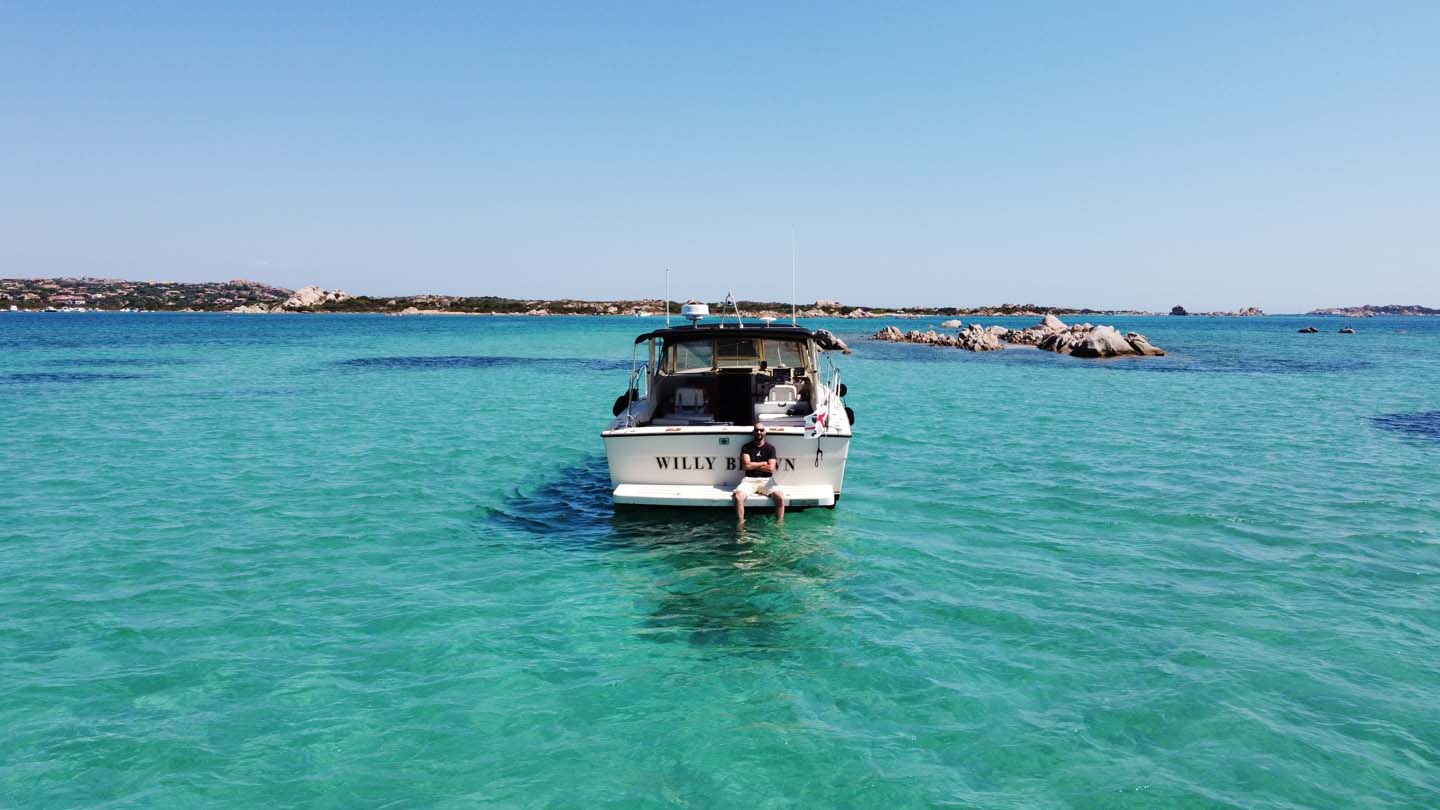
Valentine, Captain of WILLY BROWN, creator of MAGRÒ EXCURSIONS, between these intermediate islands and related channels was born. As a good native he knows how to defend and protect them. Worked for 20 years with the La Maddalena Archipelago National Park Authority as a nautical driver (environmental monitoring). This unique Background, all “Made in LMD,” allows him to make them visit in a smart, curious and sustainable way. Valentino makes his own the famous aphorism of Nobel Laureate in Literature Ernest Hemingway “Earth is a beautiful place, she is worth fighting for,” paraphrasing it with “La Maddalena Archipelago is a unique place, these islands are worth fighting for.”
An archipelago to love
His Cocktail is based on Islands (seven parts), just enough sunshine, just enough mistral, and cobalt blue, emerald, and turquoise transparencies and reflections.
The advice, although it is nonalcoholic, is to drink it in moderation; it can be as intoxicating as a chilled Vermentino di Gallura.